
Why port productivity can change the economics of a coal voyage
Published by Will Owen,
Editor
World Coal,
Konstantin Kalnyi, CEO & Founder, Kiev Shipping Ltd, outlines how port delays, terminal productivity, and realistic laytime assumptions can affect the final cost of a coal voyage as much as the negotiated freight rate.
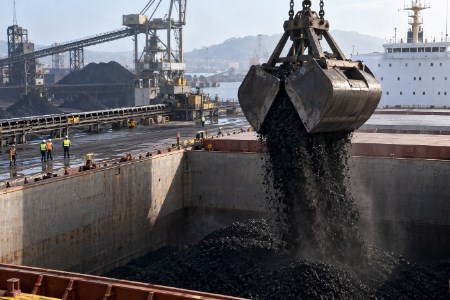
A coal freight quotation may appear to be driven mainly by vessel size, route, and market conditions. In practice, the time a vessel is expected to spend in port can be just as important. A competitive freight rate can quickly lose its advantage when congestion, slow cargo handling or unrealistic laytime assumptions extend the voyage.
Shipowners calculate voyage economics by estimating the total number of days required from delivery to redelivery. Every additional day at anchorage or alongside creates operating costs and prevents the vessel from accepting its next employment. This exposure is reflected in freight negotiations, particularly at ports with a history of congestion or inconsistent loading performance.
The commercial clock is governed by the charter party. After arrival, the master tenders a Notice of Readiness, subject to the vessel meeting the contractual requirements. Laytime then commences in accordance with the agreed wording, often after a specified notice period. The Statement of Facts records the operational timeline, including: berthing, weather interruptions, equipment breakdowns, shift changes, and stoppages. These records later form the basis of the laytime calculation and any demurrage or despatch claim.
Coal terminals may publish impressive nominal loading rates, but the figure stated on paper does not always represent sustained performance. Conveyor limitations, hatch changes, trimming, sampling, draught surveys, weather restrictions, and equipment maintenance can all reduce the effective rate. At discharge ports, the availability of grabs, hoppers, trucks, or storage space can have the same effect. A realistic assessment should therefore consider actual operating performance rather than relying only on the terminal’s maximum advertised capacity.
Cargo characteristics must also be examined alongside terminal productivity. Moisture content, particle size, flow behaviour, and the need for trimming can affect the achievable loading rate and the vessel’s stability during operations. Loading sequences may have to be adjusted to control hull stresses, while draught restrictions can require careful distribution between holds. A rate based on continuous conveyor operation may therefore be unrealistic when the vessel must frequently change holds or suspend loading for surveys and stability checks.
Vessel design also matters. A ship with a lower freight indication may have hold dimensions or hatch arrangements that slow cargo distribution and trimming. A geared vessel may offer greater independence at a port with limited shore equipment, while an ungeared vessel can be more economical at a specialised terminal equipped with high-capacity shiploaders and unloaders. The cheapest vessel is not necessarily the vessel that produces the lowest completed voyage cost.
Congestion adds another layer of uncertainty. If several vessels are waiting for the same berth, the expected queue should be investigated before the fixture is concluded. The parties must also understand whether waiting time counts as laytime and how delays caused by the terminal, weather, or port authorities are allocated under the charter party. Ambiguous wording can turn an operational delay into a lengthy commercial dispute.
Successful coal transportation therefore depends on aligning vessel characteristics, terminal capability, and contractual terms before the ship is fixed. Freight remains important, but it should be evaluated together with anticipated port time, cargo-handling performance, and demurrage exposure. Accurate operational information at the negotiation stage enables cargo owners and shipowners to compare vessels on the basis of the total voyage economics, rather than on the headline freight rate alone.
Photo credit: Kiev Shipping Ltd
Read the article online at: https://www.worldcoal.com/coal/23092026/why-port-productivity-can-change-the-economics-of-a-coal-voyage/