
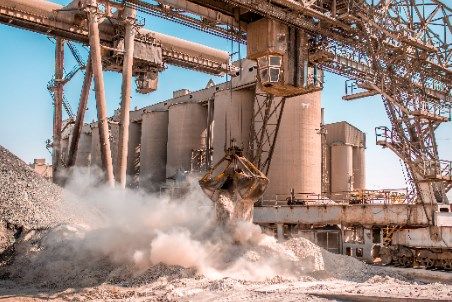
Walk some mine sites and you may see dust hanging in the air. For years, some have treated it as a nuisance, a housekeeping issue. Today, however, our industry understands that invisibly contained in many mine site’s dust is respirable crystalline silica – a potentially serious long-term threat to many mine workers.
The data is sobering. Silica exposure is tied to silicosis, chronic lung disease, and increased risk of lung cancer. In both coal and metal/non-metal operations, we're seeing more aggressive disease, showing up in younger workers and progressing faster than in previous generations. This isn't a theoretical risk buried in a regulation, instead, this is someone’s colleague, someone’s family member.
MSHA’s new silica rule is a direct response to that reality. In 2024, the agency finalised a standard that halves the permissible exposure limit for respirable crystalline silica to 50 micrograms per cubic metre of air based on an eight-hour time-weighted average, with a new action level at 25 micrograms. While effective dates for the rule have been delayed due to pending litigation, the levels themselves are subject to a specific provision in the Federal Mine Safety and Health Act of 1977 (Mine Act) that prohibits MSHA from weakening miner protections when it revises or replaces a standard.
Therefore, these new levels may become the rule for all US mining operations – and they are among the most stringent dust rules the industry has ever faced.
Some operators are asking, 'Are we ready for this?' On some sites, there may be a gap in systems. These gaps may relate to the way haul roads are maintained, how crushers and conveyors are enclosed and ventilated, how dust collectors are sized, what maintenance gets done between production pushes, and how to implement more engineering controls versus heavily relying on other administrative controls or personal protection equipment. While no one can guarantee that these controls will meet the new requirements, each step forward will improve conditions.
Not all dust is created equal, and not all controls are equally effective. Hazardous dust, combustible dust, and respirable crystalline silica behave differently and require different strategies. For silica in particular, the most powerful work happens fundamentally at the source: conditioning material before transfer points, redesigning chutes and enclosures, selecting equipment that reduces generation rather than just collecting dust after the fact. Personal protective equipment remains important, but it cannot be the primary plan.
This is also where digital and operational excellence can come into play. Continuous monitoring, real-time alerts, and smarter use of operational data can help sites detect emerging problems before they become exceedances or incidents. The same mindset we apply to energy audits, fleet optimisation, and operational technology refreshes can and should be applied to dust: understand the baseline, identify the 80/20 opportunities, invest where you get the biggest reduction in risk per dollar spent. Frequently, a bonus result is that when dust mitigation infrastructure is regularly maintained, operating costs can go down and mineral recovery can go up.
The good news is that mining already knows how to work in a multidisciplinary way. Successful operations integrate mine planning, materials handling, ventilation, water, energy, and logistics into a single ecosystem. When health, safety, environmental, maintenance, engineering, operations, and digital teams sit at the same table, silica solutions are part of how the mine runs.
Trust builds when working together. And as that trust builds, Miners are more confident that the air they breathe today won’t cost them their health tomorrow or in the long term. Communities and regulators will see an industry that takes emerging science seriously and moves quickly to address concerns. Investors will know that operational risk is being managed, not deferred.
Silica dust is one of mining’s invisible concerns. The sites that are leaning in now, modernising their systems, and embedding dust control into everyday decision-making won’t just check the compliance box. They’ll be safer, more resilient, and better positioned for the next wave of change that’s already on the horizon.
Author note
Debra Johnson, Senior Strategist, Stantec.