Editorial comment
As we delve further into 2026, a universal truth is coming ever increasingly into focus: the demand for critical minerals is accelerating. While it has long been acknowledged that the energy transition is a key factor of this skyrocketing demand, with critical minerals such as copper, lithium, nickel, and aluminium crucial for the development of modern energy systems, recent geopolitical instability with resulting implications for oil and gas supply has only exacerbated the race towards renewable energy sources, further driving demand for these all-important minerals.1
Register for free »
Get started now for absolutely FREE, no credit card required.
With the IEA estimating that attaining 2050 Net Zero goals will necessitate a six-fold increase in the annual production of critical minerals, the need for innovative solutions is paramount to meeting these goals and facilitating renewable energy targets in the long term.2 Securing supply chains of critical minerals remains high on the agenda for many governments across the globe, with the EU recently launching the critical mineral section of its energy and materials procurement platform, in the aim of not relying on any single country for more than 65% of its demand.3
The race to meet critical mineral targets has increased the tempo of the conversation surrounding the feasibility of seabed mining for the extraction of nickel, manganese, copper, and other critical minerals that could be harnessed in the pursuit of building electronics essential to the energy transition.4 A further development in this matter came to light last month when American Ocean Minerals Corp., a deep-sea mining firm led by former Rio Tinto CEO Tom Albanese, announced plans to merge with Odyssey Marine Exploration in a US$1 billion all-stock deal aimed at building one of the world’s largest portfolios of underwater mineral deposits.5 This deal has been described by Deep Sea Minerals Corp. as “indicative of accelerating momentum across the sector”. The company also underlined the importance of facilitating the responsible growth of the seabed minerals industry through “innovation, collaboration, and adherence to high environmental and governance standards”.6 It will be interesting to watch how this conversation unfolds as the year progresses.
In a similar quest for innovation, the industry has also been turning to the cosmos for answers in the pursuit of critical minerals. Ideon Technologies continues to use cosmic ray muons – subatomic particles born from supernova explosions – to locate mineral deposits underground via muon tomography, signing a five year deal with Rio Tinto late last year to deploy muon tomography across six of its mining sites.7,2
Furthermore, perhaps revitalised in part by the success of Artemis II in April 2026, murmurings persist surrounding the future feasibility of the moon itself as a resource for both rare earth elements and metals.8 While it may seem incredible at this stage, the rate at which mining technology has progressed in recent years demonstrates that the industry simply cannot be underestimated. We look forward to continuing our coverage on the mining sector as it evolves and rises to ambitious new challenges, wherever it may take us – perhaps a rebrand to Intergalactic Mining Review could lie somewhere in our future...
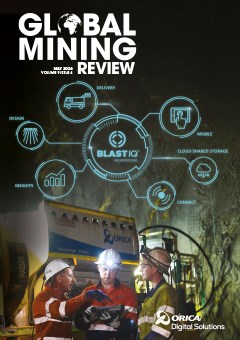
Our May 2026 issue reflects the integral role of the industry in pushing forward this drive for critical minerals, while maintaining an unwavering focus on ensuring productivity, consistency, safety, and sustainability in mining operations. We hope that you enjoy this next instalment of Global Mining Review, and stay tuned to keep up to date with the industry as we move further into 2026.