
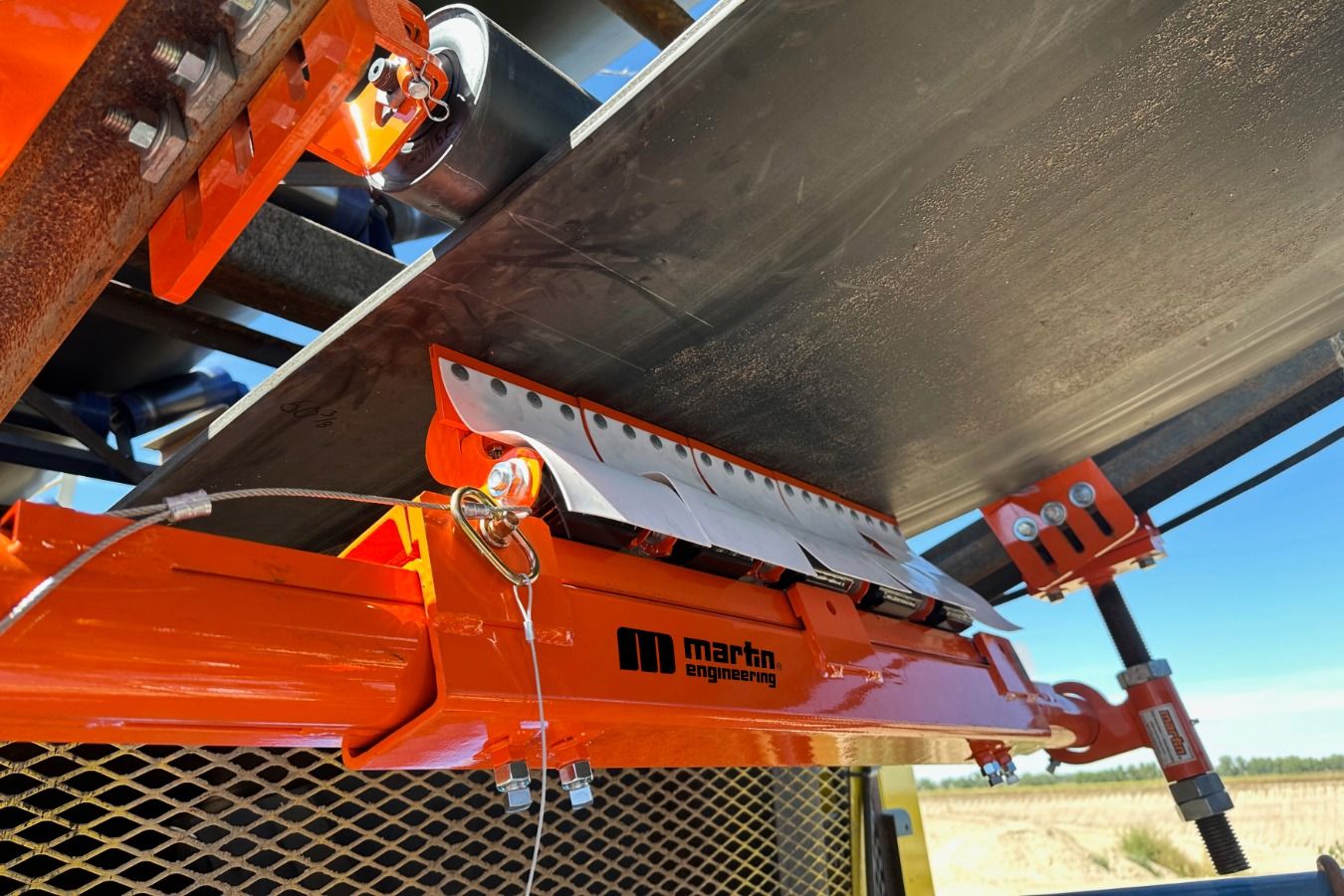
A common conveyor efficiency issue is positioning belt cleaners in the optimal locations. Structural design, spatial limitations, and safe access can be barriers to effective belt cleaning.
CEMA recommendations on placement and positioning
Primary cleaner placement is specified by the head pulley diameter and where the material leaves the belt. The Conveyor Equipment Manufacturers Association (CEMA) defines the secondary position as the space between the head pulley and the snub pulley on the return run of the belt. Unfortunately, structural designs often result in a very short section of belt surface between the head pulley and the snub pulley, which is the ideal location for many secondary cleaner designs. This limited distance leaves little room for belt cleaners in the secondary position.
Additionally, designers often place work platforms based on major components, overlooking access for belt cleaner inspection or maintenance. Belt cleaners typically require more attention than major components to ensure system efficiency because the blades are wear components that must be maintained at optimal cleaning pressures.
Design and installation considerations
There are many simple options designers should consider:
1. Is the drive pulley wrap angle really needed or are you just applying it from habit?
A common default wrap is 210 degrees, created by the position of the snub pulley. The gap between the head pulley and snub pulley is an ideal location for a secondary cleaner, but the combination of pulley diameters and wrap angle may make mounting a secondary cleaner difficult and maintenance nearly impossible. We recommend utilising an updated engineering design programme that uses either the DIN or CEMA methods for calculating accurate tension values.
2. Consider using a larger diameter head pulley.
Choosing a head pulley based on the minimum diameter may seem like it saves money, however, the US Mining Safety and Health Administration (MSHA) reports that up to 85% of maintenance problems are due to fugitive materials, which increase costs for cleanup, labour, and equipment replacement. A larger head pulley can allow the installation of two cleaners in the primary position and enough snub pulley space for one or two cleaners in the secondary position, significantly reducing the amount of fugitive material.
3. Prioritise ergonomic access to the belt cleaners.
Maintenance personnel can spend up to a third of their time simply accessing equipment. Designing access to seldom inspected or maintained components based on minimum walkway codes increases costs. Consider structures and work platforms that facilitate belt cleaner inspection and maintenance.
4. Consider using motorised drive pulleys.
Motorised pulleys offer energy advantages and weight savings and open up space for belt cleaner installation and maintenance. Since all rotating components (including the main bearings) are inside the pulley, the external stub shafts need minimal space to mount to the structure.
2. Consider professionally trained installation.
Belt cleaners must be mounted accurately, typically within a few millimeters, to operate optimally and reduce the risk of belt damage. Partnering with the belt cleaner supplier ensures proper installation with minimal adjustments and helps the new chute maintain a clean, professional appearance.
Conclusion
A belt cleaner system should be properly specified, designed, and installed to gain the direct and indirect long-term cost benefits of reduced fugitive material, but compliance is also an issue. Safe access with adequate space for installation, maintenance, and inspection is critical to supporting longer system life and a lower cost of operation.